
Haworthia and Haworthiopsis Information and Care
About the Haworthia and Haworthiopsis
Haworthias and Haworthiopsis are petite succulent houseplants often compared to Aloes, and Gasteria. This comparison is no surprise as they're all members of the Asphodeloideae family. However, unlike Aloes, Haworthias and Haworthiopsis are almost always small and slow growing plants.
They don't need much maintenance or care and can go many weeks without water if required. They also truly shine in unusual containers or interesting soil mixes.
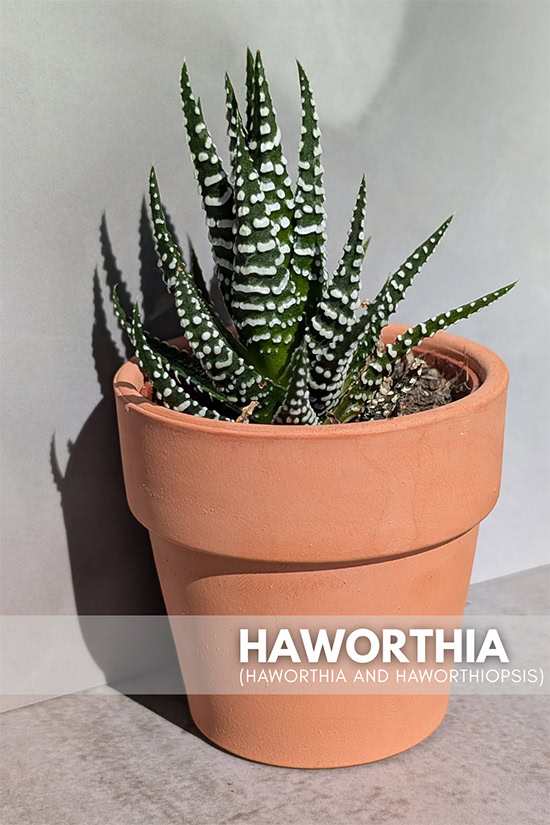
A small Haworthiopsis plant, often goes by the older name of "Haworthia".
They can make fantastic gifts and presents and are suitable for a home or office environment. They thrive with minimal fuss or attention, provided they're placed in a room with average warmth, away from direct sunlight, and given the occasional drink.
How do you pronounce Haworthia and Haworthiopsis correctly? Say: hah-WORTH-ee-uh (for Haworthia) and hah-WORTH-ee-OP-sis (for Haworthiopsis)
Just over 10 years ago all these plants would have been known as "Haworthia". However, modern genetic studies have shown that some plants within this genus are different enough to have a separate genus. The new genus, Haworthiopsis, was created in 2013 when modern genetic studies showed that some species were distinct enough to warrant their own classification.
Reclassification takes a long time to implement, so it's normal to still call these plants "Haworthia". You may also see them labeled with this name. For the average owner, the name change doesn't matter much: the care needs for both are virtually identical.
Haworthia vs Haworthiopsis - The most notable difference is in the leaves. Haworthia often have translucent 'windows' at the tips, a clever adaptation to allow light to penetrate the leaf's interior. Haworthiopsis species typically have thicker, tougher leaves and lack these windows.
As well as being easy going houseplants, when it comes to picking out a Haworthia or Haworthiopsis there's a diverse array of varieties to choose from.
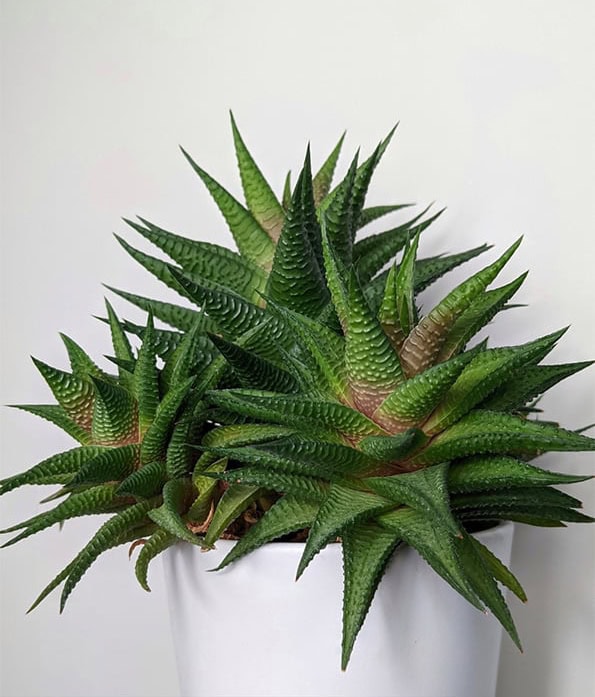
While Haworthias and Haworthiopsis are normally bought as small plants, they can still create a striking presence after a few years of growth.
Some of the more commonly found ones are described below.
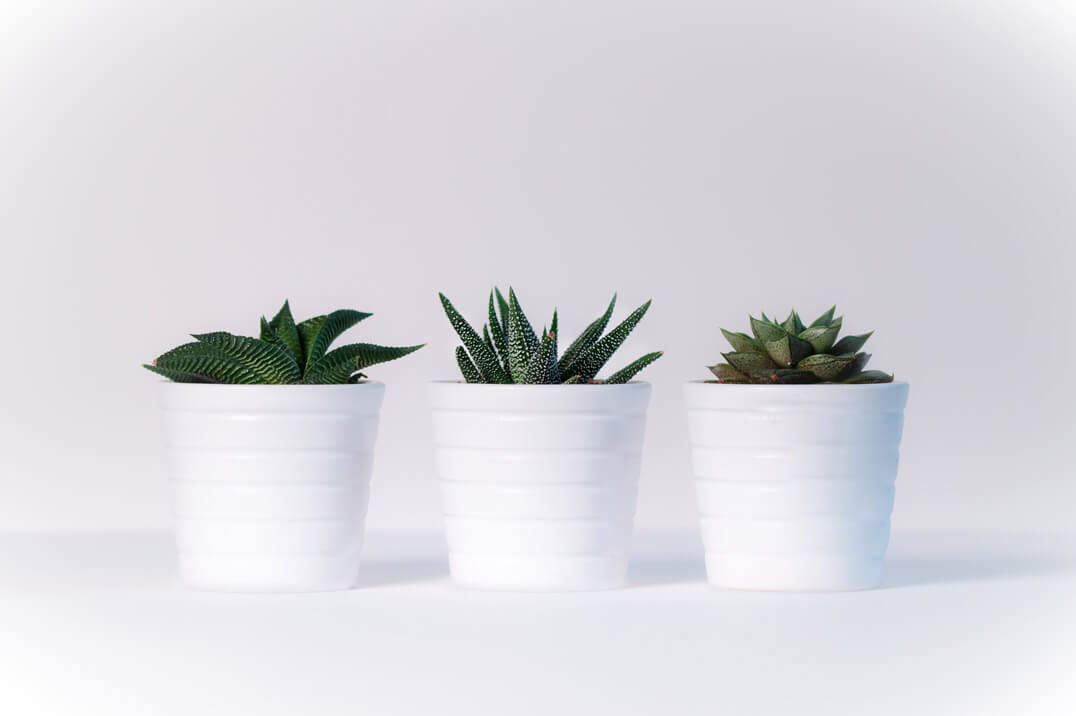
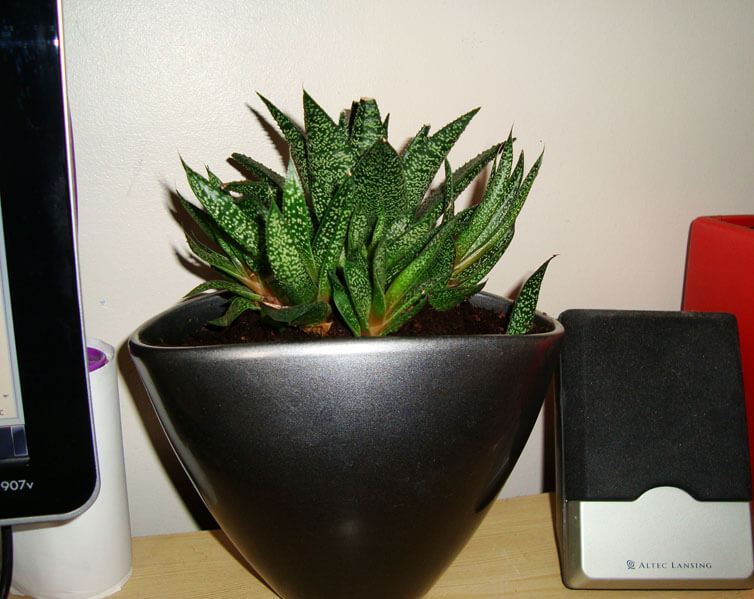
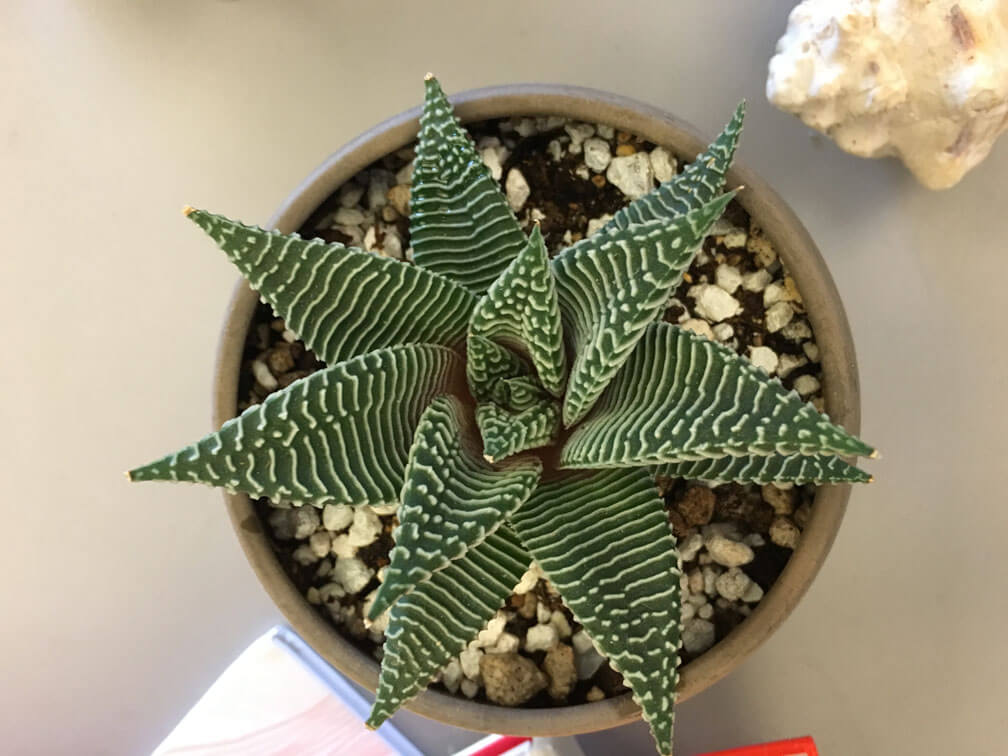
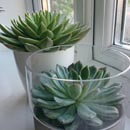
H. limifolia has firm, chunky leaves that are ridged and usually triangular. They have prominent solid ridges that line the outside of the leaves (last picture in the gallery and the first plant in the photo below).
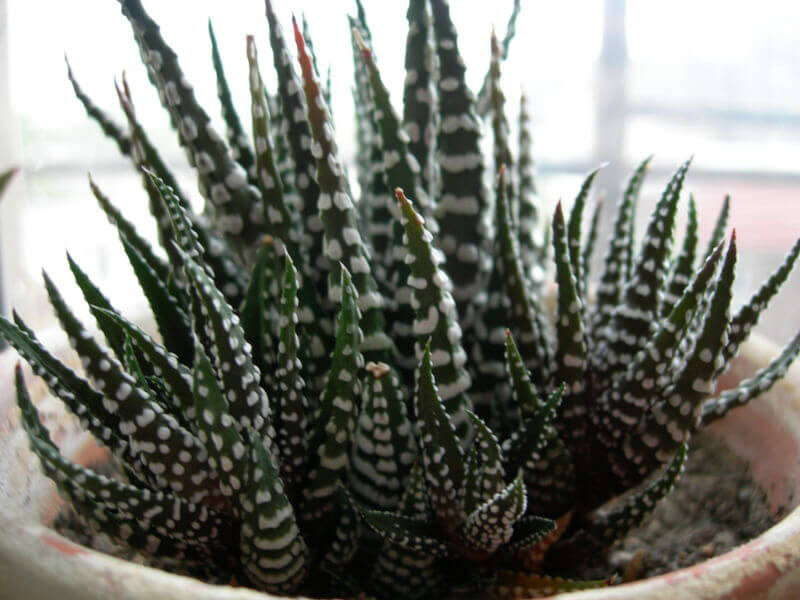
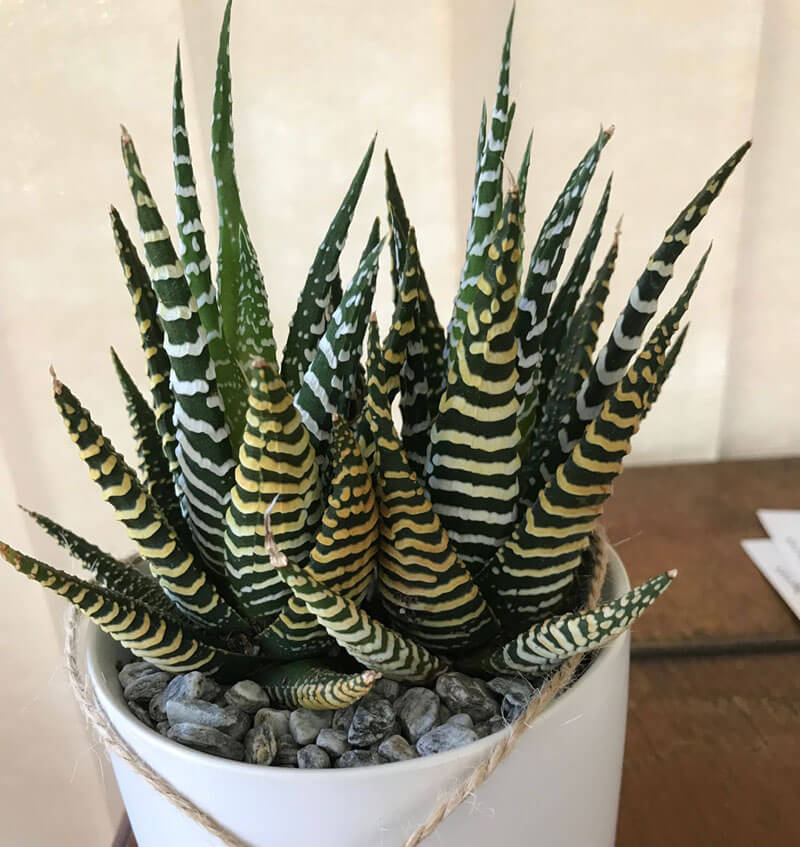
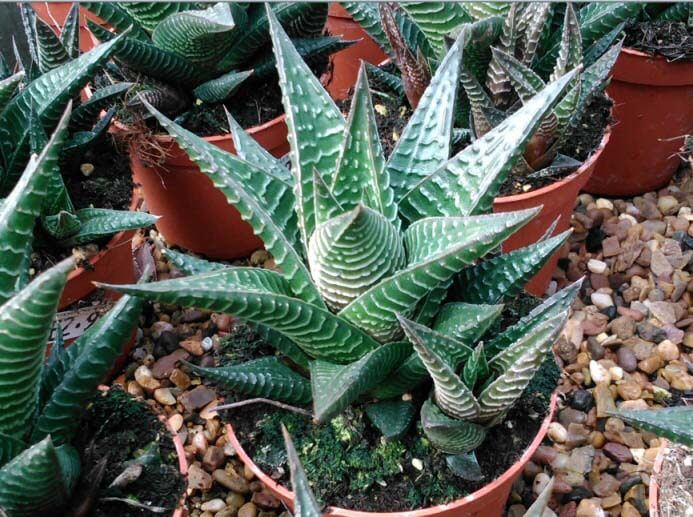
Perhaps the most popular varieties are H. attenuata and H. fasciata, both are commonly known as the Zebra Cactus.
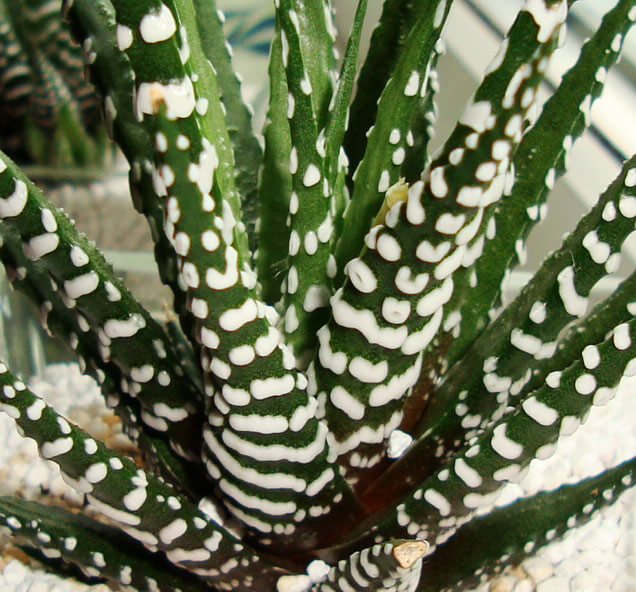
The white wart-like tubercles cover the back of the leaves often in a stripy arrangement resembling a Zebra stripe pattern (the photo at the start of the article and the middle plant in the photo below).
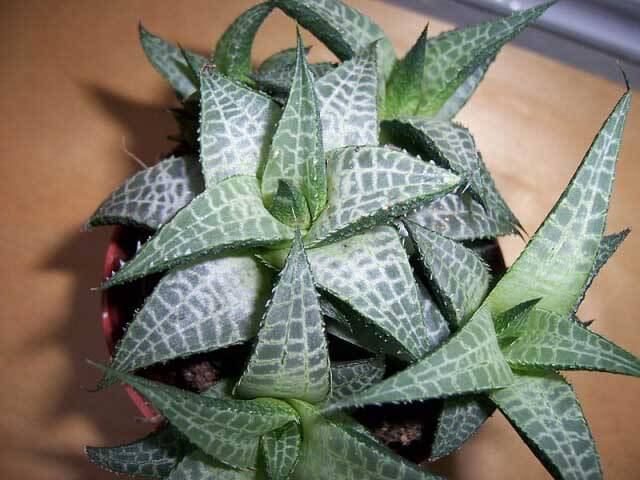
A lot to take in? - There are a huge number of varieties out there to buy. If you're not sure what you want (or already own), check out our photo gallery. You can also share a photo of your plant in the comments below.
H. margaritifera or the Pearl Plant has slightly wider leaves and the "warts" are more dotted and spaced out producing a "pearl" type of effect.
H. tessellata often called the Star Window Plant, features semi-transparent 'windows' instead of the white tubercles (warts) seen on others. (see third gallery picture to the right and third plant in the photo below).
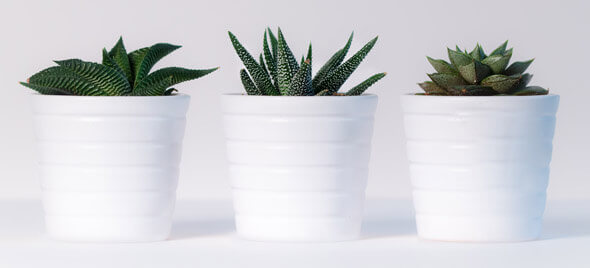
Three different types of Haworthia Plants - H. limifolia, H. attenuata and H. tessellata
That's the introduction covered so scroll down for the full care instructions for your Haworthia/Haworthiopsis plant.

Hi, I'm Tom!
If you're like me and enjoy the challenge of growing houseplants and getting them to thrive, then OurHouseplants can help. This website shares my knowledge and years of growing plants and provides my advice on properly caring for your indoor plant friends.
Haworthia and Haworthiopsis Photos

Haworthia and Haworthiopsis Care Guide
Light
Haworthia and Haworthiopsis are reasonably adaptable plants that that will take various light conditions. They will thrive in medium to bright, indirect light. Avoid both direct sunlight and deep shade.
Direct, intense sunlight will cause the leaves to develop stress colors (unsightly red, purple, or brown hues). If you move the plant to a shadier spot, these colors will typically fade over time, provided the damage isn't severe.
Deep shade tends to weaken the plant over a prolonged period. You might notice it becoming an excessive light green, losing the markings or that the plant stops being compact and instead becomes lanky or etiolated.
If you notice this happening, more light is needed.
Watering
A surviving plant can tolerate being watered only once a month, a thriving plant will likely need water every fortnight, or potentially once a week in very warm weather.
Either way, water well and then only water again when the soil has largely dried out. These plants are very tolerant of underwatering but will quickly rot if overwatered. This is the number one reason people will lose their plants. They will simply rot at the base and come away in your hands.
Avoid getting water into the crown or rosette of the plant. If water sits there, especially in cooler temperatures, it will quickly lead to crown rot.
The plants come from South Africa and are used to periods of low rainfall. It's a succulent plant and can store water inside of the leaves and will easily cope if you forget to water for a while.
Humidity
As is typical with many other succulent plants, humidity is not important. However, they do like good ventilation, so avoid stagnant or poorly ventilated corners of your home.
Feeding
Feed your Haworthia/Haworthiopsis very occasionally and when you do, ensure it's only a weak solution. Feeding two or three times a year is plenty. Plants that are producing copious numbers of offsets around their base might benefit from a little more feed, but still, go easy as they're not big feeders.
Temperature
Average indoor warmth between Spring and Autumn / Fall. The naturally cooler temperatures found in an unheated or guest room during Winter are perfect because this plant likes to rest at that time of year.
It doesn't like being too cold and absolutely no lower than 4°C (40°F).
Repotting
It's rare for any Haworthia/Haworthiopsis to outgrow its pot quickly, therefore repotting is only usually required infrequently and normally only when offsets have filled the pot.
Sometimes, a large clump of offsets can become top-heavy or unstable, causing the entire plant mass to lift or tumble out of the container. Repotting is then necessary simply for stability.
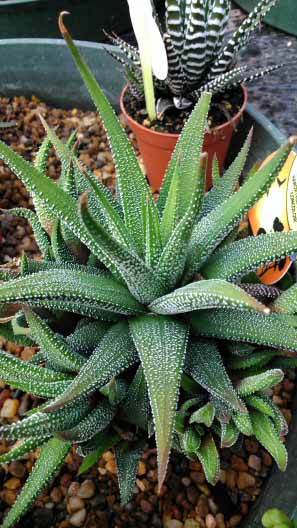
You only need to think about repotting when the plant has started to fill the pot with offsets, as shown here.
If you do find yourself needing to repot your plant, use a similar soil composition to what was used previously. Normally this will be standard houseplant or cactus compost with grit or perlite added to aid in drainage.
Good drainage is important as these plants are prone to rotting if the potting mix stays wet for long periods.
If you divide the plant and remove a number of the offsets to reduce the overall size of the clump you can probably just reuse the existing pot / container. If not, just choose a pot slightly bigger than the last.
If you'd like to watch me talk about this plant, here's my care guide on YouTube
Propagation
When you repot your Haworthia/Haworthiopsis you can separate the offsets from the parent. Use a sharp knife and cut as close to the parent plant as possible, ensure the offset has some roots. Sometimes a knife isn't even needed as the offset will be loose like a wobbly tooth and just come away naturally with a small tug. Just don't be too aggressive!
No roots or you were too aggressive? I've accidentally knocked out larger plants from a cluster before, with the roots still left behind with the rest of the cluster. Whoops! If this happens to you, don't sweat it. As long as the base is intact, you can simply pot it up in a container of moist compost and it will grow new ones in a matter of weeks.
Wait a day for the offset to dry slightly. This reduces the chances of the raw "wound" from rotting when added to compost. Then plant it up in a small container using a standard potting or cactus compost mix. Water and keep warm.
I've had much better success by doing this at the end of Spring or during Summer when it's both warmer and lighter.
Speed of Growth
Expect slow growth. Although some of the fleshy more leafy varieties such as H. margaritifera or the Pearl Plant grow quite a bit faster.
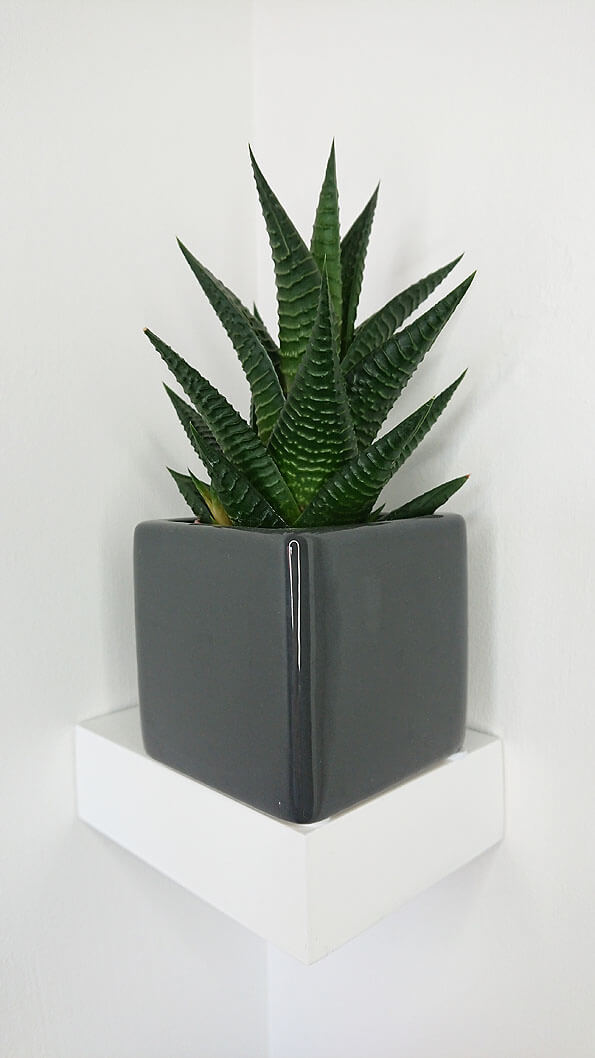
The ridged and fleshy leaves help to create unusual shapes, while their smaller size suits a small space where you might want something visually interesting to look at.
Flowers
Yes, this is a flowering houseplant. The flowers will normally appear in the Summer months on the end of a long stem (inflorescence).
The flowers aren't very exciting. But because Haworthia is a very slow growing and compact plant, not much happens visually during the year, therefore the flowering period can be a welcomed treat to show that your plant is actually "alive" and doing well.
If you want to see what they look like, be sure to check out our readers' photos in the comments section further below.
Height / Spread
Both Haworthia and Haworthiopsis are small plants by design and anything from 4 cm (2 in) to 20 cm (8 in) in height is usual. The flower stem though can be quite substantial in length.
These are pretty narrow and slender plants, but they spread and multiply quickly through offsets, so individually, they aren't very wide, but if left alone, they will form a clump within a few years.
The photo below shows what, at first glance, looks like just one plant, but if you look at the base you can see it's actually two individual plants.
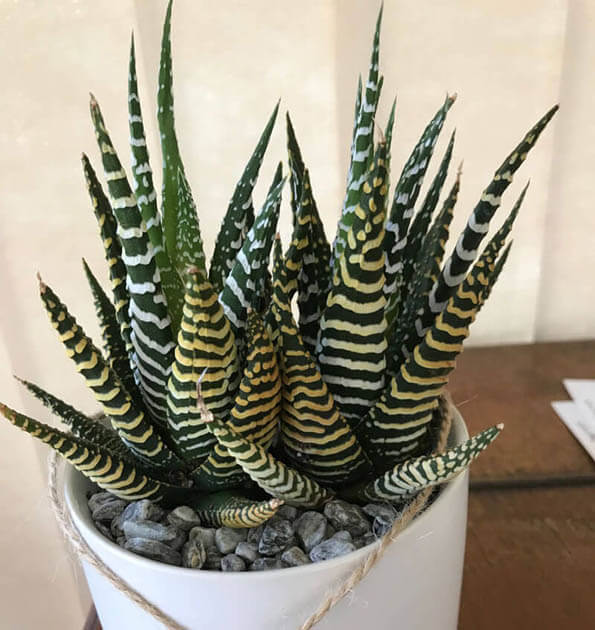
Over time this Zebra Cactus has divided and there are now two plants growing side by side. - Photo by Ruby.
Are Haworthias or Haworthiopsis Poisonous?
As well as all the other positive traits about these plants, another bonus is that neither are poisonous to people, cats or dogs.
Anything else?
These plants are compact but when treated correctly they do produce offsets quite easily.
This means the plant will spread and grow into a clump, so one solo plant at the start will quickly become many which in turn will eventually fill a pot to add some impressive visual appeal. You can let the clump continue to grow and spread within the existing container, or separate them for even more plants.
How to Care for a Haworthia/Haworthiopsis Recap
-
Moderate Light Levels They like medium light levels or bright light. Avoid direct sunlight and very shady areas.
-
Moderate Watering Once a week or so in Summer and once every two weeks in Winter.
-
Temperature Normal indoor room temperatures. 10°C (50°F) to 29°C (85°F)
-
Feeding Try to fertilize once every three months when it's growing.
- Doesn't like to be overwatered.
- Won't tolerate cold temperatures.
- Keep out of full sun.
Haworthia/Haworthiopsis Problems
Leaves going red.
This happens with many succulent plants and jungle cacti like the Christmas Cactus. It occurs when the plant is being exposed to direct sunlight i.e. it's getting too much sunlight. Essentially they're getting a "sunburn" and the stems will go purple or red color, because the plant will start to produce "anthocyanins" to protect itself.
Anthocyanins are pigments that can appear red / purple, and plants produce them as a protective mechanism. When a plant is exposed to high levels of light, particularly UV radiation (so it's not as common when growing plants under a grow light), these pigments act like a sunscreen, absorbing excess light energy that could otherwise damage the plant's tissues.
Find a new home that is slightly darker or provides shading. In a few weeks, the red should start to fade and look normal again.
Black spots / Areas.
Usually caused by overwatering, or when water is allowed to pool in the crown or between the leaf voids. The plant is basically rotting. Increase the intervals between watering, and ensure it's not sitting in water for prolonged periods.
Plant collapse.
This has likely been caused by a damaging combination of overwatering and exposure to cold temperatures.
Further Reading
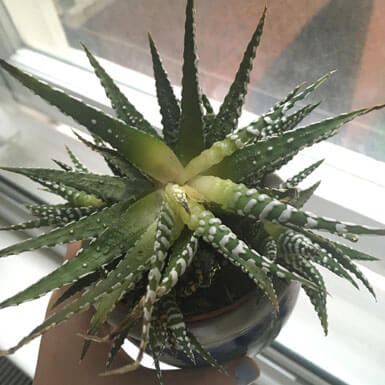
Cold temperatures or overwatering can easily cause this to happen.
Remember that Haworthia/Haworthiopsis are warm loving houseplants with only moderate watering requirements.
They must be allowed to dry out between waterings. Using a well-draining soil mix with at least one drainage hole in the container it's in will help excess water drain away and discourage root rot.
Further Reading
Are you overwatering your plants? - The Signs to look out for
Wrinkling leaves.
You will have to use your own judgment here. Wrinkling leaves on a Haworthia/Haworthiopsis is normally caused by either no water for a prolonged period or too frequent watering. If you look back on how the plant has been watered over the last few months you should be able to judge which is the cause and adjust.
There are a few more things you can look for and I outline these in my "Why are My Succulent Leaves Shriveling?" article.
If you've got a brand new plant and it's already like that, you could take the plant out of its pot and examine the soil and feel the moisture level.
Brown Haworthia leaf tips.
Some degree of leaf tip browning is normal. The most common causes are physical damage (tips being knocked), or very dry air caused by proximity to a heat source like a radiator.
You could try moving your Haworthia to a new home to prevent further browning, especially if it's quite disfiguring. But in all likelihood, the damage in most cases is confined to the very tips of the leaves and it could just be a case of not needing to do anything other than snipping the brown ends off.
My Story with the Haworthia
By themselves, these are fairly standard plants. Undemanding and easy yes, but the pay off is that they don't grow very fast and at times can have an almost artificial and alien look about them.
I do understand why they're not for everyone, but they do have some seriously passionate fans and get a lot of love (check out the comments below).
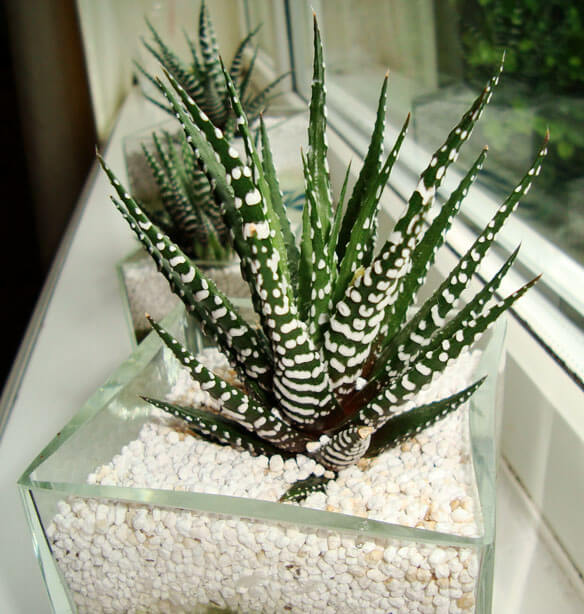
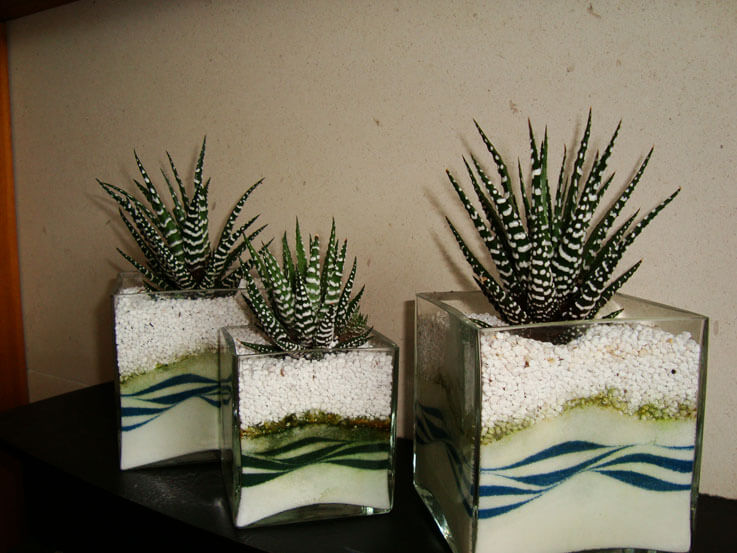
Initially, they caught my eye simply because shops were selling them in uniquely shaped containers. Or planting them up in quirky and unusual soil compositions (for example the ones below are growing in sand and small white stones).
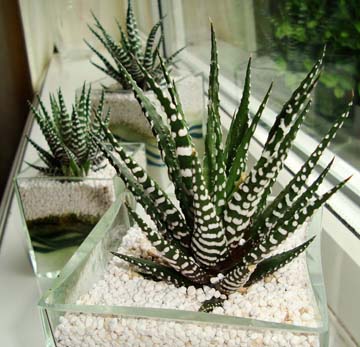
In the right pots, these plants will truly shine and add style to your home
I think the real uniqueness of these houseplants is the subtle but bold architectural statement they make. They wait to be noticed rather than scream for attention, and I appreciate that quiet confidence.
I honestly can't remember a time when I didn't have a Haworthia or two growing in my home.
Since I bought my first ones I honestly can't remember a time when I didn't have a Haworthia or Haworthiopsis growing in my home. They grow steadily and the offsets come loose quite easily so it's very easy to propagate new plants.
They've been a solid staple in my indoor plant collection and for good reason. I recommend giving them a go.
About the Author
Over the last 20 years, Tom has successfully owned hundreds of houseplants and is always happy to share knowledge and lend his horticulture skills to those in need. He is the leading content writer for the OurHouseplants Team.
Also on Ourhouseplants.com
Credit for the photo of the three Haworthia plants - Article / Gallery - Ylanite Koppens
Credit for the photo of the two plants in the white pot - Article / Gallery - Ruby
Credit for the photo of the Haworthia from above - Gallery - Andrea Rivera Arana
Credit for the Third picture in gallery - Jacopo Werther / Stephen Boisvert
Credit for the Sixth picture in gallery - Mattman723